Onsdag Billede: DIY Wheel Cover

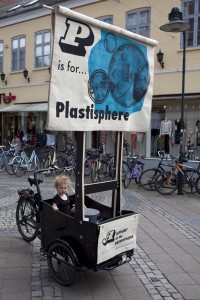
Seen around Ydre Nørrebro, a DIY wheel guard from an recycled water bottle. Awesome.

RELATED POSTS:

Posted in neighborhood, Wednesday picture | Tagged , , | Leave a comment

Community Gardens on Film

Our friend, Ruth Kaaserer, makes thoughtful, meditative, documentary films. She agreed to share her recent film Commnunity Gardens (2010) here. The film follows the seasons in several of New York City’s community gardens. You meet the gardeners and hear their thoughts about growing in the city through the ambient soundtrack. Sounds of the city mingle with interviews and music. One gardener says he sings to his plants.

The film was designed to be an installation with slide projectors and was shot with slide film. I love this because you really get to see what an amazing photographer Ruth is, in addition to her sensitive portrayal of the social relationships that form around the gardens, a sustainable center in what can be an overwhelming urban center.

Thanks for sharing Ruth!

RELATED POSTS:

Posted in arts and culture | Tagged , , , , , , , , , , | Leave a comment

Interview: Louis Helbig

We featured Canadian photographer, Louis Helbig a few weeks ago on our Friday Connect series. We were impressed when we discovered his photographs while reading about the environmental problems associated with the Alberta Tar Sands oil extraction industry.

Mr. Helbig agreed to answer a few questions about his work.


Helbig became interested in photography growing up in Williams Lake, British Columbia, a small logging town in Western Canada.  He first shot pitcures with a Voigtlander camera using 120mm film. Today, he shoots digital photographs from 1000 feet above the ground in a small, two-seater plane. Aerial photography combines his love of photography and flying.

As a young man, Helbig gave up photography to study at the London School of Economics, which led to what he calls a career in “conventional bureaucracy.” He admits to being “not very good” at this type of work and he returned to the camera six years ago.  Art is now his full time job. Though, Helbig says that it is only in the last 3 years that he has begun to call himself an artist.

In the summer of 2007, Helbig began the Tar Sands project when he noticed a:

[L]ow-level pervasive buzz in Canada’s real time culture, that is in the everyday talk in coffee shops, on door steps, and the many other unsung places where people share what matters with each other. That buzz was all about going to Fort McMurray, Canada’s Shangri-La to make one’s fortune. Everyone seemed to know someone who had gone or was going, packing up and moving out.

Helbig notes that this migration for money was not being commented on in the Canadian media or politics. It was then that he decided to take to the sky and “shed some light on what was not being addressed in Canada’s official institutions, private or public.”

So, what are the Alberta Tar Sands?

The site is home to Athabasca oil sands of northeast Alberta. Oil sands are in 70 countries worldwide, but the largest sites are in Venezuela and, of course, Canada. Estimated in 2003 to contain approximately 174.5 billion barrels of oil, the Alberta Tar Sands energy reserves are held in a mixture of sand, clay, water and bitumen. Bitumen is an extremely viscous form of petroleum that requires extensive processing to separate into a usable product. Bitumen is commonly referred to as tar.


Working with images of the Tar Sands, says Helbig, came from wanting to apply “whatever talent I had/have as an aerial art photographer to something consequential.”  He photographed the area in the summer of 2008 and then again in the early part of 2012.

Helbig says that during his recent return to skies over Alberta the public debate around what is happening in Northern Canada has exploded. The Alberta Tar Sands are currently the largest suppliers of oil to the United States outside of the Middle East.  Enbridge, Inc., the large Canadian crude oil company, is proposing to build a new pipeline, named the Northern Gateway Pipeline. This would connect the Tar Sands of Alberta to an international shipping hub in Kitimat, Canada, allowing for the export of crude oil to Asia, thereby expanding the reach of the Tar Sands crude oil industry. There are many who oppose this plan, including First Nations groups who criticize the proposed pipeline because of the potentially negative effect on the health of the environment. The pipeline is set to run through tribal lands and leaks, spills, and or other by products of the crude extraction industry could effect not only the environment but the health of the people who live on that land, say First Nations leaders.  Helbig comments dryly, “The Tar Sands are a big thing. It’s the biggest thing in Canada.”

Helbig’s project is called Beautiful Destruction. A dialectical title that encapsulates the artists complicated view on the issues of the Alberta Tar Sands. He sees and comments on the negative environmental impact of the crude oil industry in Canada, but he is primarily interested in presenting his images and letting the viewer engage with them on their own terms.

Helbig says:

Many people simply close off their minds when they hear that the photos are of the tar/oil sands. I had one fellow get up in a huff during a presentation I gave at a camera club because he felt that my “message was a well crafted propaganda piece (driven by foreign interest groups) and had no place in the camera club.”  His statement … is consistent with industry’s fears and messaging which views any imagery as a threat. But I also get the same from the environmental side, where I’m not infrequently condemned for making something so awful appear beautiful. The sooner we can grow up and get real about the issue, and maybe open ourselves up to this art , the better off we might all be.

Even if the photographer himself is not taking sides, we can see the massive impact this resource extraction is having on the landscape of Northern Canada in his photographs and that is an important resource. Helbig wants his images to spark discussion about the issue, and to encourage Canadians and others to engage in the complexties of the Tar Sands project which has been effecting the Canadian environment since 1913.

Note: all images in this post are the property of Louis Helbig. Please visit his website to learn more about the project.

RELATED POSTS:

Posted in environmental activism, Interviews | Tagged , , , , , , , , , | Leave a comment

Onsdag billede: The guys who take abandoned bikes away

It is amazing that more people in Denmark commute to work than in all of the U.S. As everyone here knows, there are ridiculous amounts of abandoned bikes in this city. It is not remarkable to point this out. What is kind of stunning though is to see the guys who collect the forgotten bikes doing their job. This was in the morning yesterday. I wonder how often they have to offload their haul in a single day.

RELATED POSTS:

Posted in neighborhood, Wednesday picture | Tagged , , | Leave a comment

Onsdag: Billede fra kvarteret

Very insistent moss slowly eating this ugly sign!

RELATED POSTS:

Posted in Wednesday picture | Tagged , , , | Leave a comment

Tofu with peppers and olives

I am getting better at making tofu and was able to get two blocks of tofu out of 3 liters of soy milk today. Today’s pressing was with peppers and olives. These are becoming more and more like drawings and I am looking forward to more experiments along these lines soon as well as incorporating more local ingredients from our food coop and foraged items.

RELATED POSTS:

Posted in MISC, Tofu | Tagged , , | Leave a comment

City Bee Habitat: Berlin … and beyond

Our time in Berlin is over and we are excited to be back in Copenhagen. The city bee habitat research we were doing will inform bigger projects here where we live. We decided to put our little bee habitat out in Lichtenberg before we left. Here are some photos of where it now lives on the edge of two neighborhoods.

(Click on images to get larger, full photos.)

The end … of this episode. Stay tuned for more urban habitat stories.

RELATED POSTS:

Posted in habitat, neighborhood, public space | Tagged , , , | Leave a comment

Friday Connect: Berlin Gardens

This week’s link love is all about city gardens. We understand that some people might have city garden fatigue, at least hearing about them, and we encourage you to do more than read about them and to get involved with – or better, help start – a garden where you live.  We love urban gardens and while in Berlin we have gotten to see some really awesome initiatives. First, we would like to share a photo essay from our visit to the Allmende-Kontor, a crazy raised bed garden and community gardening resource on the grounds of the old Tempelhof Airport in Berlin. This historic airport was closed in 2008 and opened up to the public as a park in 2010. The physical scale of a park on the grounds of an airport was disorienting. This was space made for giant machines, not for people. We have never really encountered an urban space like this that was so vast, in the center of 4 million people, and without trees or other vertical obstructions.

Overview of the park and the garden:

Bathtub raised bed:

Records, pallets, and bed frames making a beautiful hodge-podge of raised beds:

and one more:

The garden at Tempelhof is considered to be part of the concept of “intermediate use” being promoted by the City of Berlin. From their website:

“Intermediate and ‘pioneer’ uses are the results of economic and social structural transformation. In other words, new and open spaces that provide room for experimentation and creative potential arise in areas where the original use of the location has come to an end.”

A group of people started the project to become a hub, networking all the community gardening efforts in the city, with a garden springing up around the offices of this initiative. They have a seed bank and offer instruction in gardening. The idea of intermediate use, is another way to describe gentrification, but the garden is a wonderful experience.  Here is the website for the garden at the airport.

Today, we are visiting the Prinzessinnen Garden , another Berlin community garden, that has revitalized an abandoned lot. We will be posting more about this Berlin garden next week.

We are returning to Copenhagen on Saturday and while sad about leaving Berlin, are looking forward to getting back to our city’s gardens.

Like our friends at Dryk Nørrebro and the Skolehaver (teaching garden) in Bispebjerg.

RELATED POSTS:

Posted in Friday connect, growing, public space | Tagged , , , , , , , | Leave a comment

City Bee Habitat

Worldwide, industrial agricultural uses the European honey bee to pollinate crops. Starting in 2006, there was a notable decline in honey bee populations, commonly referred to as “colony collapse disorder.” Researchers speculate that this may be due to stress or disease from the overuse of honey bees for pollinating crops.

While we don’t have all the information on colony collapse disorder, we have been learning about things one can do to encourage healthy bee populations. Honey bees require maintenance and care, but there are other types of bees out there that don’t require as much work. Through the Land Drama performance series and scientist Anja Wynns, we learned about how to make habitat for “solitary bees.” Solitary bees do not have a hive, queen, or make honey. They are not affected by the same parasites that affect honeybees. They are easier to encourage in your backyard garden, or in city green spaces. According to Wynns, it is a good idea to encourage solitary bees because they are excellent pollinators, and could help sustain plant life and agriculture in the wake of honey bee loss. These tiny insects are a key element in healthy growing ecology.

While doing a residency in Berlin, we have been researching wildlife habitat in urban areas and wanted to do some tests around solitary bee habitat. We looked at making both elaborate aesthetic designs and creating habitat that was integrated into existing cracks in city spaces.

To make a successful solitary bee habitat, you need an arrangement of long, thin tubes placed in a location that, ideally, faces east, so that the bees can catch the warmth of the sun. The tubes can be made by drilling into something or using a a pre-made tube form. The pre-made forms can be naturally occurring like in reeds or bamboo. We used bamboo for our tests.

We shaped the bamboo tubes into a triangular form and created a bee pattern on the side for quick visual recognition for people. We are interested in how habitats can be made or designed that is engaging to both wildlife and people. Habitat that inspires people to become invested in what happens to the animal life around them.

There are several kinds of solitary bees, among them the mason bee. So named, because of the way this bee seals off its home to protect its eggs as they grow over the winter. As more people learn about colony collapse disorder, many, wanting to help, have started building bee habitat in their backyard gardens. There is a thriving YouTube community on how to build solitary bee houses. Here are some of our favorites:

 Yes Mag-Mason Bee House How To. This one is short and sweet. Also, who is this mason bee loving kid?

These ladies love their backyard garden times!  Totally bee-keeping-tastic.

3:58 of solitary bees flying from their home-made habitats, great for the variety of options for how to make solitary bee houses.

RELATED POSTS:

Posted in environmental activism, growing, habitat, homesteading | Tagged , , , | 2 Comments

Onsdag: Billede fra kvarteret / Wednesday: Picture from the ‘hood

Bonnie, Ada and I were taking a long walk through the Kreuzberg neighborhood of Berlin today and came across this stencil. We couldn’t agree with it more.

RELATED POSTS:

Posted in public space, Wednesday picture | Tagged , , , , | Leave a comment